


Keep Families Together
Wisconsin will not be complicit
Know your rights. Protect your community. Fight back.
ICE is using unconstitutional tactics to tear families apart and spread fear in our communities. But we can fight back. This page has everything you need: know-your-rights information, resources for legal help, and Fran’s legislative package to protect our neighbors.
Join team Hong
Get email updates from Fran and the campaign team.
By submitting this form, you consent to receive donation asks, voter contact, and informational emails from Francesca Hong. Email frequency varies. You may unsubscribe at any time by clicking the unsubscribe link in any email. Privacy Policy & Terms.
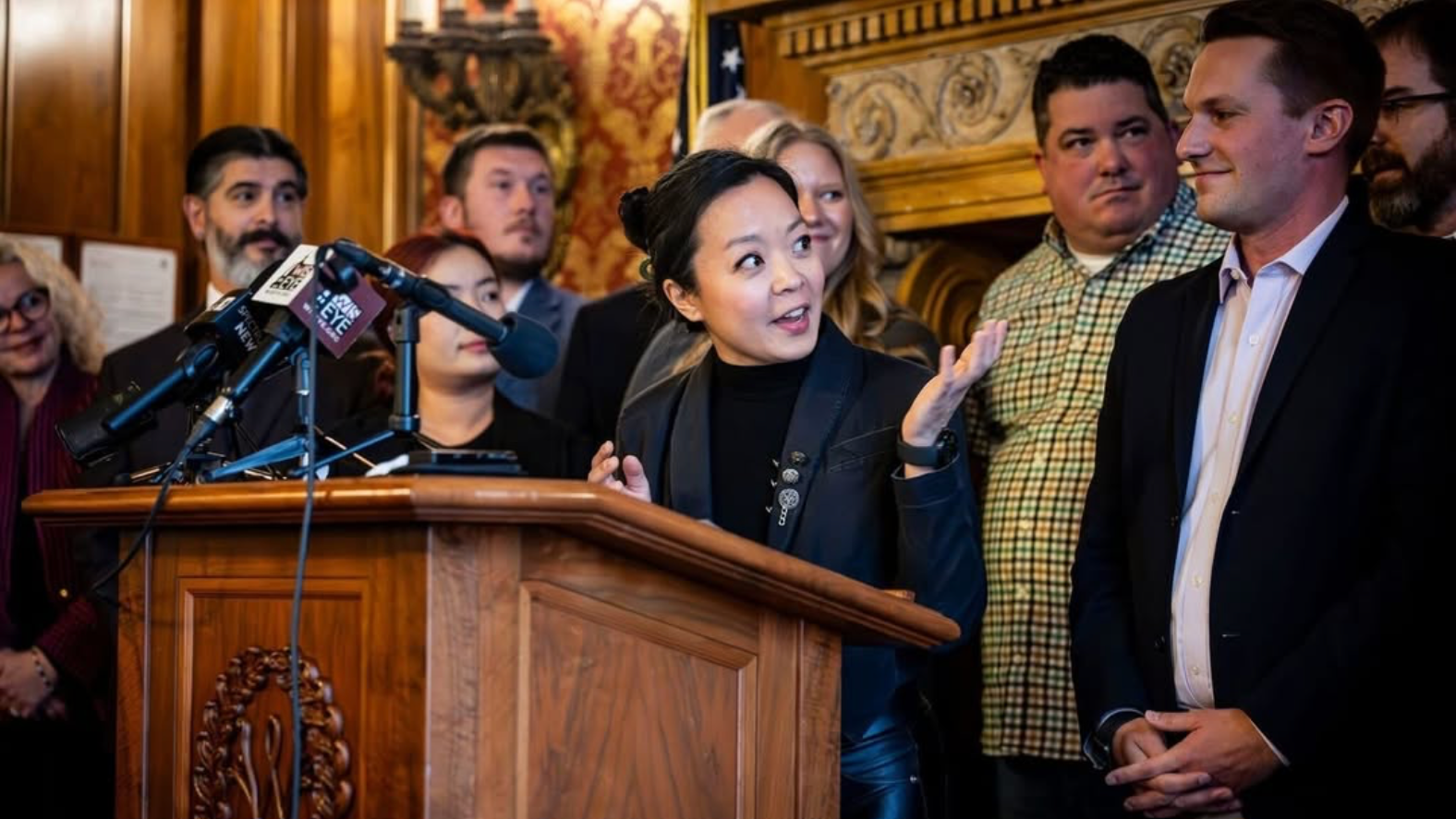
Fighting back in the legislature
Fran has introduced the “Keep Families Together” package — five bills that would use Wisconsin’s state authority to protect our communities from ICE’s unconstitutional tactics. These bills are currently before the legislature.
The “No secret police” act
AB 441 / SB 444 — Introduced August 28, 2025
The problem: ICE agents are using disguises and refusing to identify themselves while making arrests.
Fran’s solution: Would require all law enforcement to display name/badge and state authority for arrest. Would ban face coverings to conceal identity. Violations would be a Class D felony with fines up to $100,000.
Due process for all
AB 475 / SB 446 — Introduced August 28, 2025
The problem: Undocumented residents have no right to a public defender in deportation hearings.
Fran’s solution: Would appropriate $300,000 for grants to organizations providing immigration legal services. Would give counties authority to provide additional legal aid.
Ban state support for detention centers
AB 444 / SB 484 — Introduced August 28, 2025
The problem: Wisconsin facilities and tax dollars could be used to detain our neighbors.
Fran’s solution: Would prohibit state/local facilities from being used for immigration detention. Would block taxpayer dollars from funding detention operations.
Protect safe community spaces
AB 57/ SB 54 — Introduced February 24, 2025
The Problem: The federal “sensitive locations” policy was rescinded. Fear of ICE keeps families from sending kids to school, seeking medical care, or attending church.
Fran’s solution: Would ban state/local officials from assisting ICE in schools, hospitals, childcare centers, places of worship, and public buildings.
Ban all state and local ICE collaboration
AB 739/ SB 493 — Introduced August 28, 2025
The Problem: Some localities have 287(g) agreements that turn local cops into immigration enforcers using YOUR tax dollars.
Fran’s solution: Would expand the ban to all times and locations. Would end existing 287(g) agreements and ban new ones.
Related: Wisconsin Supreme Court case on ICE detainers
In December 2025, the Wisconsin Supreme Court agreed to hear a case filed by the ACLU on behalf of Voces de la Frontera challenging whether it’s legal for Wisconsin jails to hold people on ICE detainers. A ruling is expected by mid-2026. If successful, this would establish statewide that local law enforcement cannot hold people beyond their release date just because ICE requests it.
Know Your Rights
Whether you’re a citizen, permanent resident, or undocumented, you have constitutional rights. Here’s what you need to know if ICE comes to your home, workplace, or community.
If ICE Comes to Your Door
You do NOT have to open the door
Unless they have a warrant signed by a judge (not an ICE administrative warrant), you can keep your door closed. Ask them to slide any warrant under the door so you can check if it’s signed by a judge.
How to tell if a warrant is valid
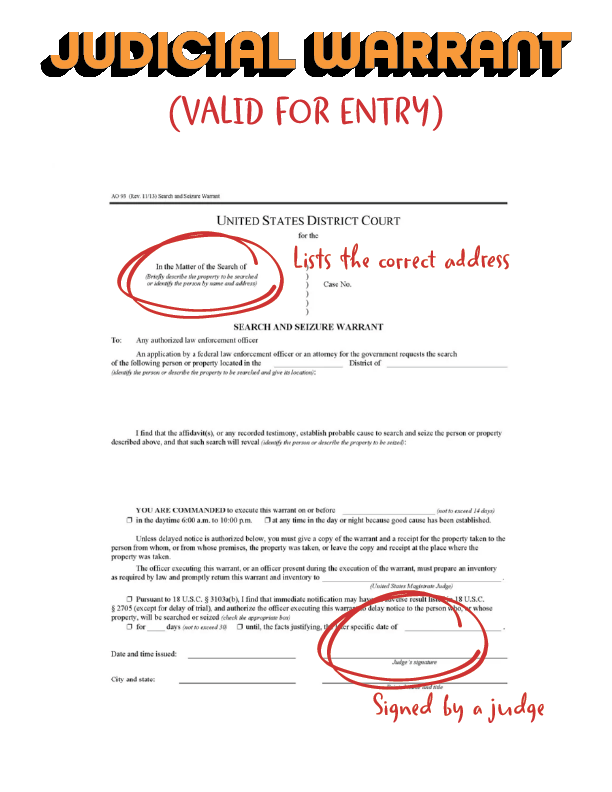
Judicial Warrant (valid for entry)
- Signed by a judge
- Lists the correct address
- Authorizes entry into your home
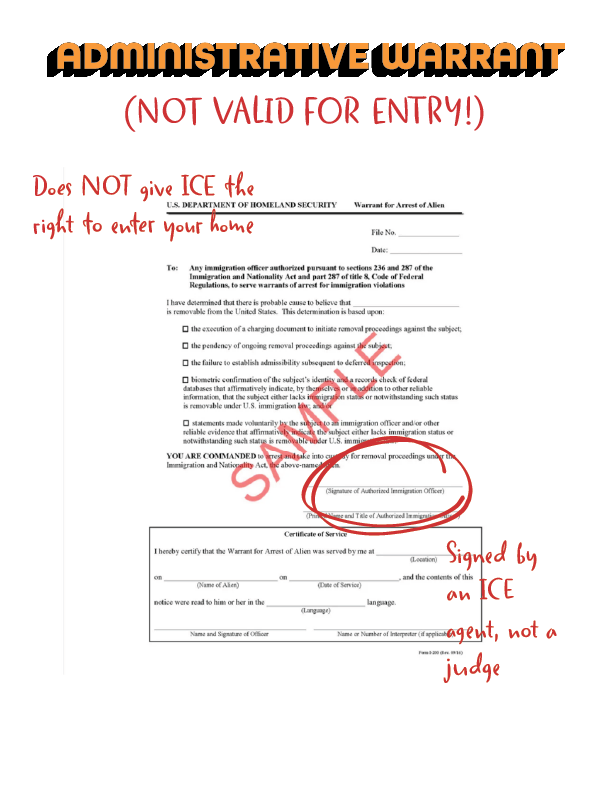
Administrative Warrant (invalid for entry)
- Signed by an ICE agent, not a judge
- Does NOT give ICE the right to enter your home
- You can refuse entry
You have the right to remain silent.
You do not have to answer questions about where you were born, your immigration status, or how you entered the country. You can say: “I choose to remain silent.”
You can record the interaction.
You have the right to document what is happening.
Do not sign anything.
ICE may pressure you to sign documents that waive your rights. Say: “I will not sign anything without speaking to a lawyer.”
You have the right to document what is happening.
Do not hand over a foreign passport, consular ID, or any document showing your country of origin.
If You Witness an ICE Action
You have the First Amendment right to observe and record law enforcement in public spaces. Here’s how to do it safely:
Stay at a safe distance.
There’s no single legal distance that applies everywhere. Stand far enough away that you’re clearly not in an officer’s path and cannot be accused of interfering with their work. Immigrant rights groups recommend at least 8-10 feet as a starting point, but use your judgment based on the situation — more distance is generally safer. Law enforcement officers consider “lunging distance” to be 20-22 feet.
If told to back up, comply — but keep recording.
Point your camera at your feet while stepping back to document that you’re following instructions. Then continue recording from further away. You do not have to stop recording just because an officer tells you to.
Do not physically interfere.
Recording is protected by the First Amendment. Blocking officers, grabbing someone, or making physical contact is not. Stay calm and keep your hands visible.
Document as much as you can:
- Badge numbers (if visible) or lack of identification
- Vehicle license plates
- Time, date, and location
- What officers are wearing (uniforms, plain clothes, masks)
- What they say and do
Protect identities when sharing footage.
If you post a video publicly, consider blurring the faces of people being detained to protect them. Focus your camera on the officers, not the people being targeted.
Important: “Sensitive Locations” Policy Has Changed
On January 20, 2025, the Trump administration rescinded the policy that limited ICE enforcement at schools, hospitals, churches, and other “sensitive locations.” This means ICE can now conduct enforcement actions at these locations. You still have your constitutional rights in these spaces, but they are no longer formally protected from ICE activity.
Fran’s AB 57 would restore these protections under Wisconsin state law — but it has not yet passed.
Get help in wisconsin
If someone is detained — call immediately
Madison Area
Free & low-cost legal help
Voces de la Frontera — Free Legal Clinic
Hours: Saturdays, 9 AM – 11 AM
Additional resources
State Bar of Wisconsin Lawyer Referral
Phone: 608-257-4666
Phone (Toll Free): 800-362-9082
Check Immigration Court Dates
Phone: 800-898-7180
What you can do right now
Prepare your family
Have a conversation with your loved ones about what to do if ICE comes. Know your emergency contacts. Have important documents accessible but secure.
Save these numbers now
Put these in your phone before you need them:
- Madison — Office of Immigrant Affairs: 608-242-6260
- Madison — CILC: 608-640-4444
- Milwaukee — Voces de la Frontera Emergency Hotline: 800-427-0213
Spread the word
Share this page with your community. Contact your elected representatives. Print know-your-rights cards for your neighbors, coworkers, and congregation.
Join team Hong
Get email updates from Fran and the campaign team.
By submitting this form, you consent to receive donation asks, voter contact, and informational emails from Francesca Hong. Email frequency varies. You may unsubscribe at any time by clicking the unsubscribe link in any email. Privacy Policy & Terms.
Wisconsin
will not be complicit
Know your rights. Protect your community. Fight back.
ICE is using unconstitutional tactics to tear families apart and spread fear in our communities. But we can fight back. This page has everything you need: know-your-rights information, resources for legal help, and Fran’s legislative package to protect our neighbors.
Join team Hong
Get email updates from Fran and the campaign team.
By submitting this form, you consent to receive donation asks, voter contact, and informational emails from Francesca Hong. Email frequency varies. You may unsubscribe at any time by clicking the unsubscribe link in any email. Privacy Policy & Terms.

Fighting back in the legislature
Fran has introduced the “Keep Families Together” package — five bills that would use Wisconsin’s state authority to protect our communities from ICE’s unconstitutional tactics. These bills are currently before the legislature.
The “No secret police” act
AB 441 / SB 444 — Introduced August 28, 2025
The problem: ICE agents are using disguises and refusing to identify themselves while making arrests.
Fran’s solution: Would require all law enforcement to display name/badge and state authority for arrest. Would ban face coverings to conceal identity. Violations would be a Class D felony with fines up to $100,000.
Due process for all
AB 475 / SB 446 — Introduced August 28, 2025
The problem: Undocumented residents have no right to a public defender in deportation hearings.
Fran’s solution: Would appropriate $300,000 for grants to organizations providing immigration legal services. Would give counties authority to provide additional legal aid.
Ban state support for detention centers
AB 444 / SB 484 — Introduced August 28, 2025
The problem: Wisconsin facilities and tax dollars could be used to detain our neighbors.
Fran’s solution: Would prohibit state/local facilities from being used for immigration detention. Would block taxpayer dollars from funding detention operations.
Protect safe community spaces
AB 57/ SB 54 — Introduced February 24, 2025
The Problem: The federal “sensitive locations” policy was rescinded. Fear of ICE keeps families from sending kids to school, seeking medical care, or attending church.
Fran’s solution: Would ban state/local officials from assisting ICE in schools, hospitals, childcare centers, places of worship, and public buildings.
Ban all state and local ICE collaboration
AB 739/ SB 493 — Introduced August 28, 2025
The Problem: Some localities have 287(g) agreements that turn local cops into immigration enforcers using YOUR tax dollars.
Fran’s solution: Would expand the ban to all times and locations. Would end existing 287(g) agreements and ban new ones.
Related: Wisconsin Supreme Court case on ICE detainers
In December 2025, the Wisconsin Supreme Court agreed to hear a case filed by the ACLU on behalf of Voces de la Frontera challenging whether it’s legal for Wisconsin jails to hold people on ICE detainers. A ruling is expected by mid-2026. If successful, this would establish statewide that local law enforcement cannot hold people beyond their release date just because ICE requests it.
Know Your Rights
Whether you’re a citizen, permanent resident, or undocumented, you have constitutional rights. Here’s what you need to know if ICE comes to your home, workplace, or community.
If ICE Comes to Your Door
You do NOT have to open the door
Unless they have a warrant signed by a judge (not an ICE administrative warrant), you can keep your door closed. Ask them to slide any warrant under the door so you can check if it’s signed by a judge.
How to tell if a warrant is valid
Judicial Warrant (valid for entry)
- Signed by a judge
- Lists the correct address
- Authorizes entry into your home
Administrative Warrant (invalid for entry)
- Signed by an ICE agent, not a judge
- Does NOT give ICE the right to enter your home
- You can refuse entry
You have the right to remain silent.
You do not have to answer questions about where you were born, your immigration status, or how you entered the country. You can say: “I choose to remain silent.”
You can record the interaction.
You have the right to document what is happening.
Do not sign anything.
ICE may pressure you to sign documents that waive your rights. Say: “I will not sign anything without speaking to a lawyer.”
You have the right to document what is happening.
Do not hand over a foreign passport, consular ID, or any document showing your country of origin.
If You Witness an ICE Action
You have the First Amendment right to observe and record law enforcement in public spaces. Here’s how to do it safely:
Stay at a safe distance.
There’s no single legal distance that applies everywhere. Stand far enough away that you’re clearly not in an officer’s path and cannot be accused of interfering with their work. Immigrant rights groups recommend at least 8-10 feet as a starting point, but use your judgment based on the situation — more distance is generally safer. Law enforcement officers consider “lunging distance” to be 20-22 feet.
If told to back up, comply — but keep recording.
Point your camera at your feet while stepping back to document that you’re following instructions. Then continue recording from further away. You do not have to stop recording just because an officer tells you to.
Do not physically interfere.
Recording is protected by the First Amendment. Blocking officers, grabbing someone, or making physical contact is not. Stay calm and keep your hands visible.
Document as much as you can:
- Badge numbers (if visible) or lack of identification
- Vehicle license plates
- Time, date, and location
- What officers are wearing (uniforms, plain clothes, masks)
- What they say and do
Protect identities when sharing footage.
If you post a video publicly, consider blurring the faces of people being detained to protect them. Focus your camera on the officers, not the people being targeted.
Important: “Sensitive Locations” Policy Has Changed
On January 20, 2025, the Trump administration rescinded the policy that limited ICE enforcement at schools, hospitals, churches, and other “sensitive locations.” This means ICE can now conduct enforcement actions at these locations. You still have your constitutional rights in these spaces, but they are no longer formally protected from ICE activity.
Fran’s AB 57 would restore these protections under Wisconsin state law — but it has not yet passed.
Get help in wisconsin
If someone is detained — call immediately
Madison Area
Free & low-cost legal help
Voces de la Frontera — Free Legal Clinic
Hours: Saturdays, 9 AM – 11 AM
Additional resources
State Bar of Wisconsin Lawyer Referral
Phone: 608-257-4666
Phone (Toll Free): 800-362-9082
Check Immigration Court Dates
Phone: 800-898-7180
What you can do right now
Prepare your family
Have a conversation with your loved ones about what to do if ICE comes. Know your emergency contacts. Have important documents accessible but secure.
Save these numbers now
Put these in your phone before you need them:
- Madison — Office of Immigrant Affairs: 608-242-6260
- Madison — CILC: 608-640-4444
- Milwaukee — Voces de la Frontera Emergency Hotline: 800-427-0213
Spread the word
Share this page with your community. Contact your elected representatives. Print know-your-rights cards for your neighbors, coworkers, and congregation.
Join team Hong
Get email updates from Fran and the campaign team.
By submitting this form, you consent to receive donation asks, voter contact, and informational emails from Francesca Hong. Email frequency varies. You may unsubscribe at any time by clicking the unsubscribe link in any email. Privacy Policy & Terms.